
 CatholicAnchor.org
Many of you, like myself, are probably news hounds. Even though we do not always like what we read or listen to, we have a natural hankering not to be left behind when breaking news occurs. I must confess that I start my news coverage at 5 a.m. when my bedside clock radio spontaneously tells me that I am listening to NPR in Washington or Los Angeles. After I have gotten cleaned up for the day, I head downstairs to meet that cheerful young man who dutifully delivers the New York Times right on schedule. Having exhausted those two resources I am then convinced that I have learned a bit about the state of the world until tomorrow at the same time.
But recently at mid-morning someone told me that a young gunman at Umqua College in Roseberg, Oregon, killed 10 students. It is so utterly tragic. And yet, an ounce of sense would have reminded me that bad news never ceases. If it were not bad it wouldn’t qualify for breaking news. Walter Cronkite made that clear years ago when he would end his evening news broadcast with the words: “That’s the way it is, folks.”
Unfortunately, that, indeed, is the way it is. We live in a very chaotic world and sadly enough, there seems to be little that we can do about changing it, at least universally or in the long term.
Perhaps it will not seem so unusual, therefore, when we read in the Scriptures for this Third Sunday of Advent that folks asked Saint John the Baptist the same sort of question we often ask: “Where’s the good news? What should we be doing to make our world a better place?” Of course, with an ounce of brains, John’s listeners could have figured it out for themselves. Nonetheless John went ahead and basically told them to not cheat or bully others. He told them to be content with their pay, keep the laws of God, treat everyone as you would like to be treated. Done! Do all that and the world will become a better place.
Jesus, who soon followed John the Baptist, made the similar points in many of his discourses telling listeners they would be able to recognize the Kingdom of Heaven when they began taking care of those right in front of them. This earthly home of ours in not heaven but it is the closest thing we have for the moment.
So we are back to the question of discovering good news and deciding what we can do about the bad. Oddly enough, we are ordinarily more interested in simply watching CNN-like incidents for entertainment than we are in discovering their meaning and implications. It’s the “shock effect” that seems to fascinate and that’s where we leave it.
Let me suggest, though, that harvesting the news is not nearly enough. But having heard the terrible news that occurred on Oct. 2 (when I wrote this piece) few of us would have been able to journey to Roseberg, Oregon, to bring consolation to those suffering families. That difficulty, however, does not get us off the hook.
In some sense, we might say that what happened to those young students happened to us all. Each of us was diminished by the suffering of our neighbors — we are all neighbors.
If any one of us shed a tear or offered a prayer upon reading what happened in Roseberg perhaps the heavy burden of bad news was made a little lighter.
Scriptures for Dec. 13
Zephaniah 3: 14-18
Philippians 4: 4-7
Luke 3: 10-18
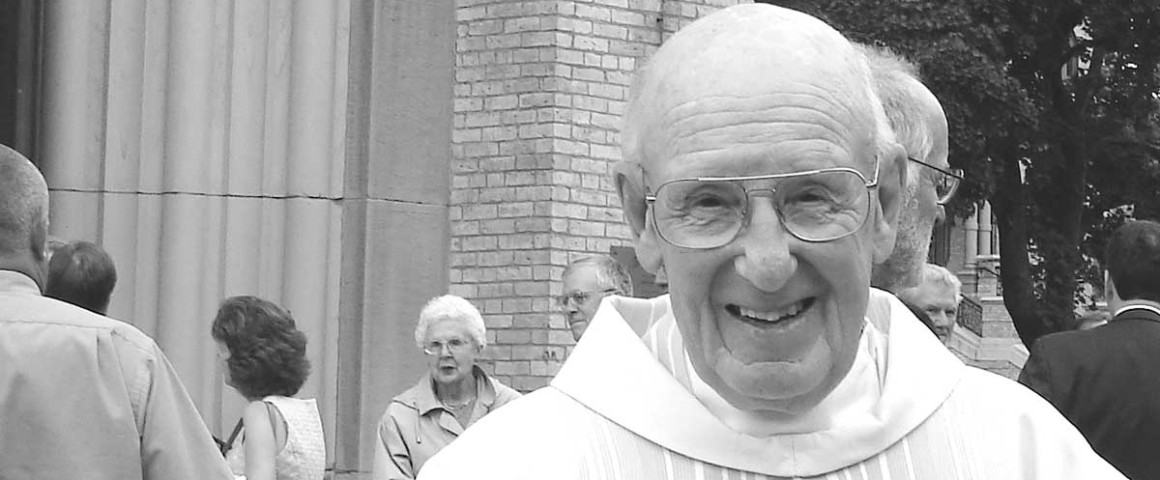
The writer formerly served the Anchorage Archdiocese as director of pastoral education. He now lives in Notre Dame, Indiana.


'When one suffers, so do we all'
Be the first to comment on this post!has no comments