
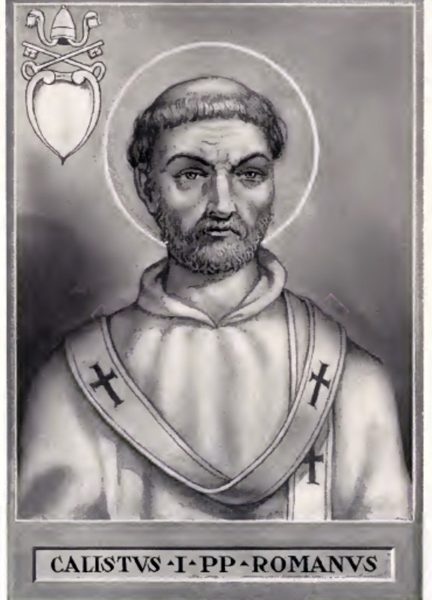
On August 10 we celebrate the Feast of St. Lawrence. The deacons of the Archdiocese of Anchorage-Juneau continue to serve according to his model.
St. Lawrence was appointed Archdeacon of Rome in 257 A.D. by Pope Sixtus II. He was in charge of the treasury and riches of the Church, distributing alms to widows and other poor people. The pope was martyred in 258 A.D. by Emperor Valerian. The prefect of Rome demanded that St. Lawrence turn over the Church’s wealth. He distributed it instead to the poor as thoroughly as possible. When St. Lawrence was summoned by the prefect, he was asked to turn over the treasure of the Church. In response, St. Lawrence presented a poor, crippled, and blind man, stating, “Here are the treasures of the church. You see, the church is truly rich, far richer than your emperor.” He was subsequently martyred on a gridiron. Before his death, St. Lawrence said to his torturers, “Turn me over; I am done on this side.”
The diaconate was established by the apostles to aid the priests and bishops, distribute alms, care for widows, and assist at liturgies (Acts 6:1-7). This is the threefold ministry of the word, liturgy, and charity deacons continue to exercise throughout the Church.
Deacons have a number of responsibilities, offering much of their time in service to the Church. As ministers of the word, liturgy, and service, deacons exercise their ministry throughout the Church.
Deacon Kurt Adler, who ministers at St. John the Baptist parish in Homer, described the duties of deacons as being generally divided between two categories: liturgical and outside of the Mass.
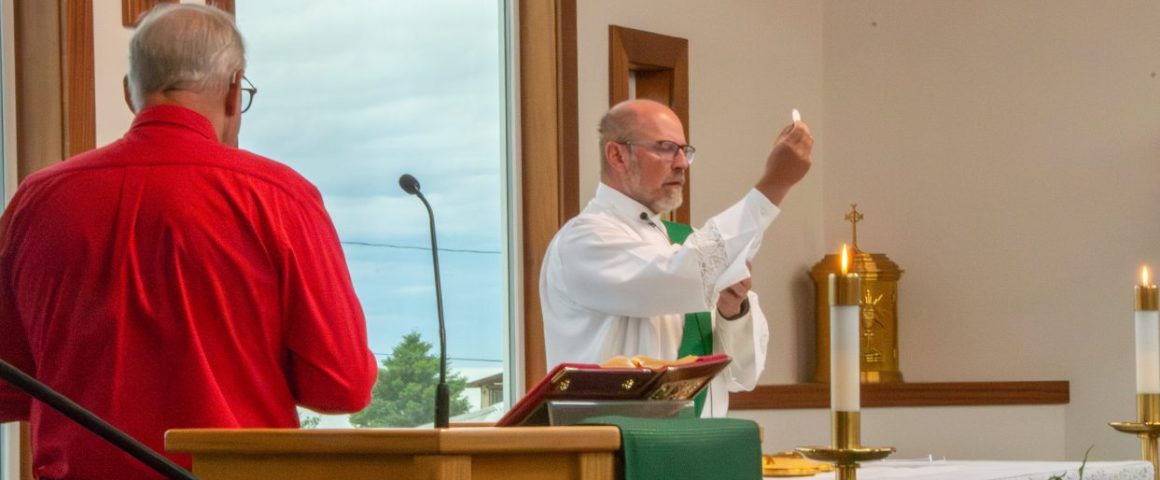
“The deacon is the minister of the chalice and the gospel. The deacon always proclaims the gospel, even if the pope is at the Mass,” said Deacon Adler. The deacon performs many duties during the sacred liturgies of the Church that flow from these offices.
Before the Mass, the deacon prepares the altar. At the penitential rite, the deacon leads the Confiteor and tropes (“I confess…” and “Lord have mercy…”).
After proclaiming the gospel, the deacon leads the congregation through the intercessory prayers. Then, the deacon prepares the chalice before consecration by pouring wine and mixing in water.
During the doxology, where the presider prays, “Through Him, with Him, and in Him…” and elevates the Host, the deacon elevates the chalice. As an ordinary minister of Communion the deacon distributes the Eucharist.
After Communion, the deacon cleans the altar and purifies the sacred vessels. At the end of Mass, the deacon dismisses the congregation after the final blessing by the presider.
Outside the Mass, the deacon has many responsibilities as well. One is to bring the Eucharist to the sick. In addition, deacons are ordinary ministers of baptism and can witness marriages. Some are tasked with teaching baptism-preparation classes and marriage preparation classes. Deacons may also assist their pastors with administrative and other duties around the parish, affording the priest more time to exercise his priestly ministries.
Deacons receive their assignments from their bishop. This includes ministries such as the Office of Family Life, which Deacon Adler leads, prison ministry, led by Deacon David Van Tuyl, hospital ministry, which Deacon Adler formerly led as a chaplain at St. Elias Specialty Hospital in Anchorage, and more.
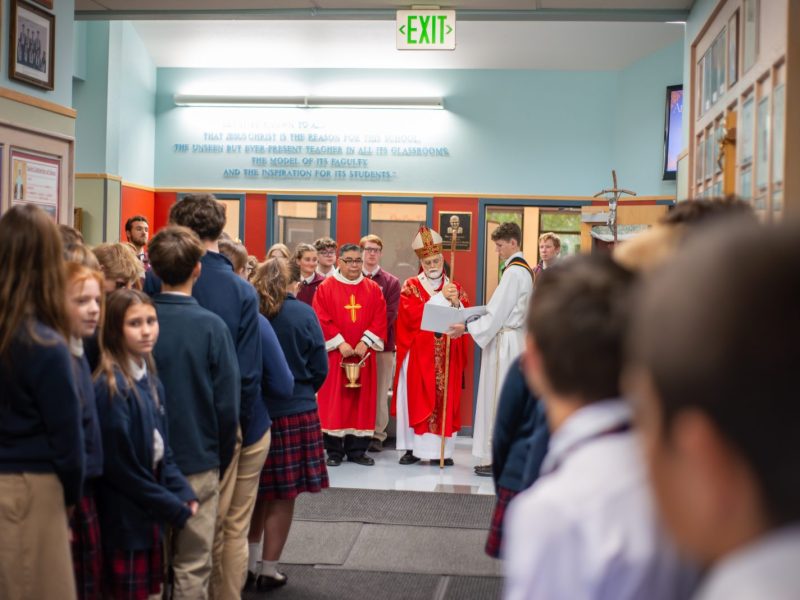
Most deacons are married men with families. They offer their ministry for the Church in addition to supporting their families. They freely choose to take on these duties. Because of their commitment, many parishes in the Archdiocese of Anchorage-Juneau are blessed by their threefold ministry to preach the word, assist in the liturgy, and practice charity, a tradition they will continue to carry out as they have the past two thousand years. Deacons are truly servants of the servants.


'Deacons bless the archdiocese through their ministry'
Be the first to comment on this post!has no comments