
Forty-eight years ago, on November 4, 1978, I professed my final vows as a Vincentian: poverty, chastity, obedience, and stability (the commitment to remain a Vincentian for life). Over the years, people occasionally ask me which of the vows is the most difficult to live. Each time I am asked that question, I believe the person expects me to answer that it is chastity, a virtue which, by the way, all Catholics are obliged to live in life. The truth is that each of the vows can be difficult at times. But from my experience, the most challenging vow is obedience.
If you think about it, poverty, chastity, and stability are commitments made directly to God, asking with humility for the grace to persevere. However, the vow of obedience is turned over to other human beings acting on behalf of God, guided by their discernment, wisdom, and experience. There are times when wills may not align. It is precisely at those times that grace intercedes. As a priest, I was called to obey the directives of my superior, just as if the Lord himself had given the same command. Disobedience would have put my own discernment and judgment above God’s will. It is not a reluctant obedience that is required, but a joyful, holy obedience.
Obedience is the bedrock of unity. Without obedience, there is eventually disorder and division. If we only obey when we judge an order acceptable to our desires, we invite chaos to reign. Imagine if we decided to disobey traffic and other civil laws; if our servicemen and women did not follow lawful orders; if our coworkers and friends decided to follow only what they consider in their best interest, convenient, and worthy of their time; or if our children disobeyed their parents, teachers, and other competent authority.
As Catholics, we have the obligation to obey God. A primary way we obey God is by obeying the pope, the Vicar of Christ on Earth (the universal church), and our bishop (the local church). We place our trust in these human beings chosen by the Holy Spirit to lead and guide us.
Recently, the leadership of the Society of St. Pius X disobeyed the pope in a very serious way by ordaining bishops without the pope’s permission. This act led to their excommunication, in the hope that the Society would repent, comply with, and obey the Holy Father, thereby working to restore unity in the church.
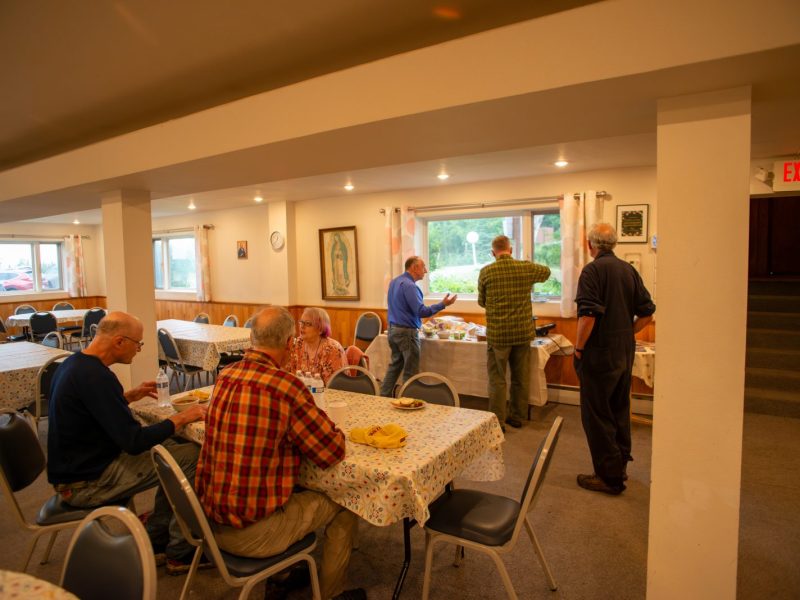
At this time, Catholics are not to attend or host services of the Society of St. Pius X. Our archdiocese has forty-six parishes, 8 of which are in Anchorage alone. All Catholics are invited and welcome to celebrate the Eucharist, all the sacraments, and community life together as brothers and sisters in Christ in our parishes.
Humility comes from seeing ourselves as we are before God: sinners in need of God’s love, justice, and mercy. Let us pray for the virtue of humility to be joyful, holy, obedient Catholics.
Hace cuarenta y ocho años, el 4 de noviembre de 1978, profesé mis votos perpetuos como vicentino: pobreza, castidad, obediencia y estabilidad (el compromiso de permanecer vicentino de por vida). Con el paso de los años, a veces me preguntan cuál de los votos es el más difícil de vivir. Cada vez que me hacen esa pregunta, creo que esperan que responda que es la castidad, una virtud que, por cierto, todos los católicos estamos obligados a practicar. Lo cierto es que cada uno de los votos puede ser difícil en ocasiones. Pero, según mi experiencia, el voto más desafiante es la obediencia.
Si lo pensamos bien, la pobreza, la castidad y la estabilidad son compromisos que hacemos directamente a Dios, pidiéndole con humildad la gracia para perseverar. Sin embargo, el voto de obediencia se confía a otros seres humanos que actúan en nombre de Dios, guiados por su discernimiento, sabiduría y experiencia. Hay momentos en que las voluntades pueden no coincidir. Es precisamente en esos momentos cuando la gracia intercede. Como sacerdote, fui llamado a obedecer las directrices de mi superior, como si el mismo Señor me hubiera dado la misma orden. La desobediencia habría antepuesto mi propio discernimiento y juicio a la voluntad de Dios. No se requiere una obediencia a regañadientes, sino una obediencia gozosa y santa.
La obediencia es la base de la unidad. Sin obediencia, inevitablemente surgen el desorden y la división. Si solo obedecemos cuando consideramos que una orden es aceptable a nuestros deseos, invitamos al caos a reinar. Imaginemos qué pasaría si desobedeciéramos las leyes de tránsito y otras leyes civiles; si nuestros militares no siguieran las órdenes legítimas; si nuestros compañeros de trabajo y amigos decidieran seguir solo lo que consideran que les conviene y merece su tiempo; o si nuestros hijos desobedecieran a sus padres, maestros y demás autoridad competente.
Como católicos, tenemos la obligación de obedecer a Dios. Una forma fundamental de obedecer a Dios es obedeciendo al Papa, Vicario de Cristo en la Tierra (la Iglesia universal), y a nuestro obispo (la Iglesia local). Depositamos nuestra confianza en estos seres humanos elegidos por el Espíritu Santo para guiarnos.
Recientemente, la directiva de la Sociedad de San Pío X desobedeció gravemente al Papa al ordenar obispos sin su permiso. Este acto provocó su excomunión, con la esperanza de que la Sociedad se arrepintiera, cumpliera y obedeciera al Santo Padre, trabajando así para restaurar la unidad en la Iglesia.
En este momento, los católicos no deben asistir ni organizar servicios religiosos de la Sociedad de San Pío X. Nuestra arquidiócesis cuenta con cuarenta y seis parroquias, ocho de las cuales se encuentran solo en Anchorage. Todos los católicos están invitados a celebrar la Eucaristía, todos los sacramentos y la vida comunitaria juntos como hermanos y hermanas en Cristo en nuestras parroquias.
La humildad nace de vernos como somos ante Dios: pecadores necesitados de su amor, justicia y misericordia. Oremos para que la virtud de la humildad nos ayude a ser católicos alegres, santos y obedientes.
'Embracing God’s will with humility | Aceptar la voluntad de Dios con humildad'
Be the first to comment on this post!has no comments