
Christ prayed that his followers “be one, as You, Father, are in me and I in you.” However, the Church’s unity has become progressively obscured by the proliferation of churches that are not in communion with each other, starting with the Oriental Orthodox schism and the East-West schism in 1054. These breaks further accelerated with the Protestant Reformation in 1517 over disagreement about how human beings are put in right relation to God. To grossly oversimplify, Martin Luther and Lutherans emphasized our need for forgiveness to be justified. We are all the prodigal son in Luke 15:11-32. The Catholic Church taught that our reception of grace brings about a real change in our lives. The saints are living examples that we can truly grow in holiness and so live out St. Paul’s instruction in Galatians 5:1: “For freedom Christ set us free; so stand firm and do not submit again to the yoke of slavery.”
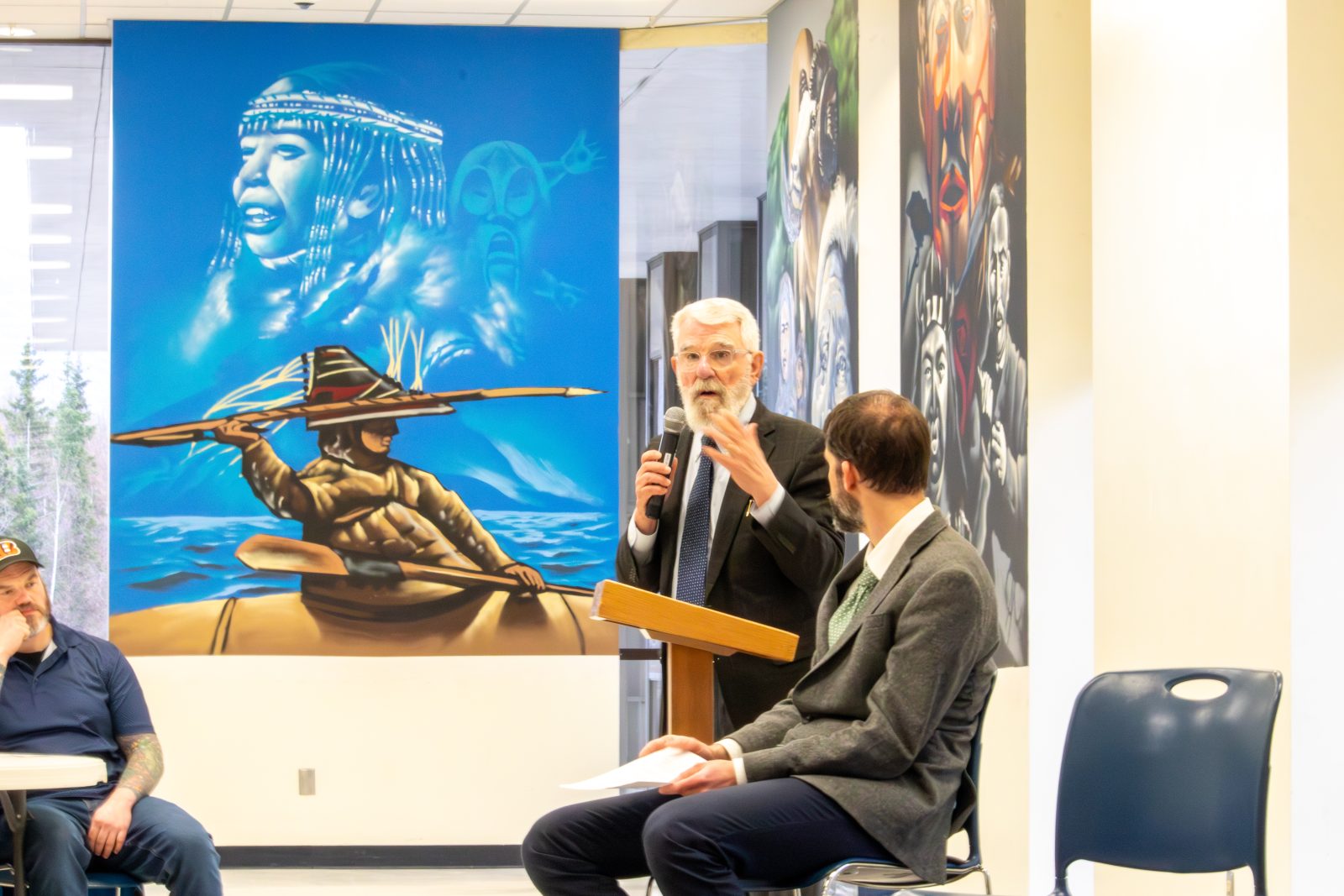
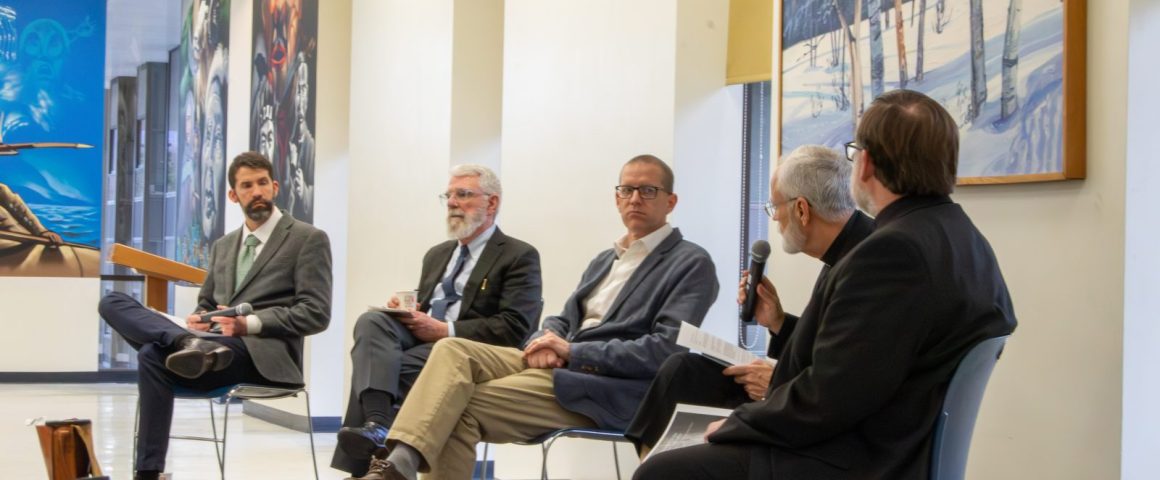
Dr. Michael Root speaks during the discussion on the Joint Declaration on the Doctrine of Justification. (Levi Livengood / North Star Catholic)
However, these two insights are not mutually exclusive, as the 1999 Joint Declaration on the Doctrine of Justification between the Catholic Church and the Lutheran World Federation affirmed. In the words of the Joint Declaration, “The teaching of the Lutheran churches presented in this Declaration does not fall under the condemnations from the Council of Trent. The condemnations in the Lutheran Confessions do not apply to the teaching of the Roman Catholic Church presented in this Declaration.”
My position as Newman Chair of Catholic theology at Alaska Pacific University entails the “promotion of cooperation and unity among Christians,” the U.S. Conference of Catholic Bishops’ definition of ecumenism. To that end I organized a discussion of the Joint Declaration for area clergy with Dr. Michael Root, one of the drafters of the Joint Declaration, and Dr. Gerald Hiestand, an evangelical Protestant theologian with expertise on justification, on May 12. Like any good conversation over lunch, I overheard plenty of asides having nothing to do with the stated topic, a common desire to understand Scripture more deeply, and the occasional respectful disagreement. These conversations are already bearing fruit as I plan next year’s event. The day culminated with a public roundtable between Archbishop Andrew Bellisario, C.M., and Lutheran Bishop, Timothy Oslovich.
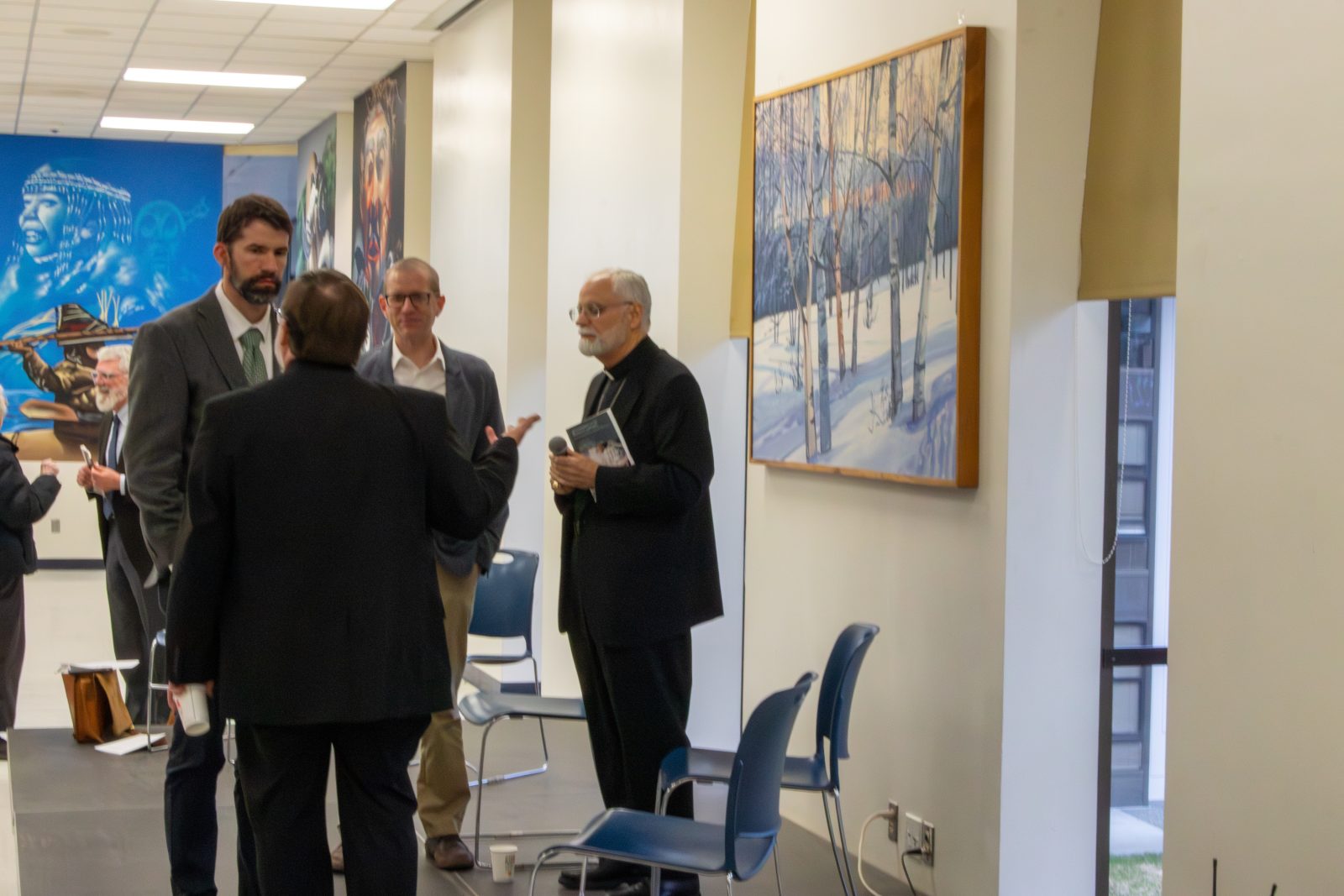
Archbishop Andrew Bellisario, C.M., talks with the other speakers after the discussion. (Levi Livengood / North Star Catholic)
Doctrinal and moral positions continue to separate our churches, and discussion alone cannot bring about communion between Catholic and non-Catholic churches. However, these real points of disagreement must not prevent collaboration when it is possible, and that collaboration begins in relationships. Organizing these events is one way I hope to contribute to the visible unity of the Church and so conform to Christ’s prayer.


'Exploring ecumenism in Anchorage and the life of the Church'
Be the first to comment on this post!has no comments