
The Catholic Church celebrates many great and well-known saints in October: our patroness, Thérèse of Lisieux (Oct. 1); the famous Francis of Assisi (Oct. 4); the very popular, and modern Carlo Acutis (Oct. 12); and Luke the Evangelist (Oct. 18). The month is full with other wonderful saints as well as the Feast of Our Lady of the Rosary.
October is also a month filled with saints whose lives and deeds bring our focus on God’s mercy. St. Bartolo Longo (Oct. 5), a man who once was a satanist priest before reverting to the faith, is one saintly example that shows us that no one is beyond God’s mercy.
Two more apostles of mercy we celebrate this month are St. Faustina Kowalska (Oct. 5) and Pope St. John Paul II (Oct. 22). Kowalska received visions that led to the Divine Mercy devotion, which includes the Divine Mercy chaplet reminding us to ask for God’s mercy “on us and on the whole world.” Her countryman, Pope St. John Paul II, brought that devotion to the world, adding the celebration of Divine Mercy Sunday to the liturgical calendar, and spreading the message of mercy so far that even young men from rural South Carolina were able to practice a devotion originating in Poland.
A spiritual predecessor of the Divine Mercy devotion is the devotion to the Sacred Heart of Jesus, celebrated on June 4. Tied to Jesus’s love for us, the United States Bishops recently consecrated our country to the Sacred Heart for the celebration of our 250th anniversary. This month, however, we celebrate St. Margaret Mary Alacoque (Oct. 16), whose visions contained the devotion that reminds us of “the infinite love of Jesus Christ which moves us to love one another.” (Pope Leo XIII, Annum Sacrum, “Holy Year,” 1899, on consecration to the Sacred Heart).
The Feast of the Guardian Angels on October 2 is another day that reminds us of God’s mercy. Out of His mercy, God provides us with these messengers to assist us throughout our lives.
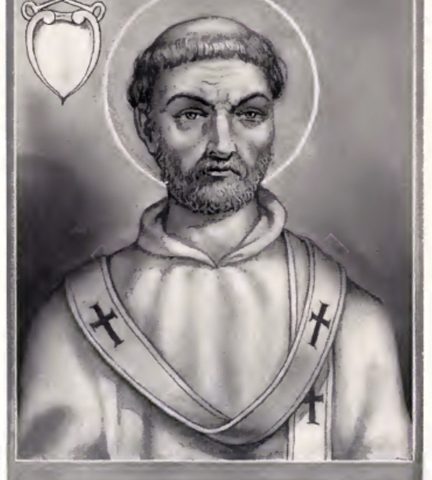
My personal favorite, however, is Pope St. Callixtus I (also Callistus; reigned 218-222 A.D.), whom we celebrate on October 14. Before his reign, no authority had determined whether certain scandalous sins could be forgiven by the Church. Callixtus settled the matter and allowed absolution for even very serious sins.
His contemporary, St. Hippolytus, was appalled that the pope would allow the absolution of sexual sins and became an anti-pope over the matter. Callixtus died, and Hippolytus was exiled to a salt mine with the then reigning pope, St. Pontius (230-235 A.D.), where Hippolytus reconciled himself to the true pope. Both Pontius and Hippolytus died in exile and the former enemies now share a feast day on August 13, showing the ability for even anti-popes to be reconciled. What made that reconciliation possible, however, was their predecessor, St. Callixtus, who showed God’s mercy in the most Catholic of ways: affirming how God grants authority to the Church to absolve all sins.
Pope Francis instituted a jubilee year of mercy in 2016, but to my knowledge, there is no month on the calendar that the Church has dedicated to God’s mercy. While there may be other possible claimants to the title, October certainly contains some of the greatest saints to share God’s mercy throughout the Church’s history. I encourage you to engage with these saints throughout the month and beyond, accepting God’s mercy and extending mercy to everyone you meet.



'October blessed with apostles of mercy'
Be the first to comment on this post!has no comments