
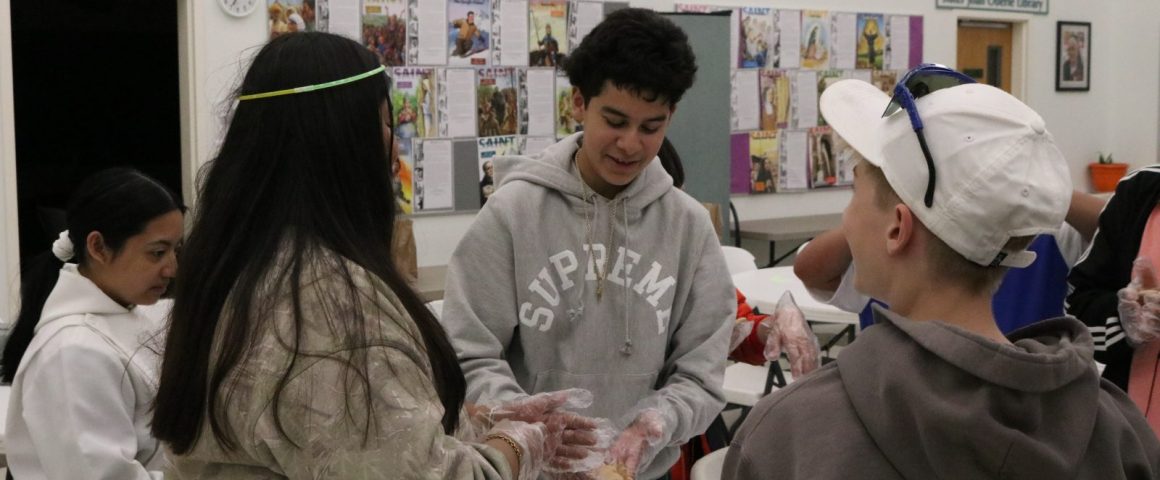
Seeking the intercession of the saints and praying for the souls of the dead are ancient practices in the Catholic Church that have given rise to many traditions. The Church dedicates the first days of November to honoring and keeping the dead in their prayers. First are the saints on All Saints Day, November 1, then all the souls in purgatory on All Souls Day, November 2. One way for families to teach children a respect for the dead and to pray for them is through following an old Catholic tradition: “Souling” and baking soul cakes.
Halloween is a contraction of “All Hallows Eve” (the night before All Saints). It carries on ancient British and Irish traditions tied closely to the Catholic feasts of All Saints and All Souls and shares similarities with other traditions around Europe. Carving jack-o’-lanterns, dressing up, going house to house, and receiving sweets on October 31 date back centuries. The first English mention dates back to the 16th century. A similar Portuguese tradition called Pão-por-Deus (“bread for God”) has occurred on All Saints since at least the 15th century. These and similar traditions throughout Europe are called “Souling,” pointing to the central purpose of “soulers:” to pray for the dead, receiving treats like cakes, bread, fruit, nuts, and, of course, chocolate and candy.
In the Philippines, some practice Pangangaluluwa (“souling” in Tagalog), wearing white cloths to look like souls to visit houses and sing in return for prayers and treats. In the Azores (an Atlantic archipelago belonging to Portugal), the primary cake given to soulers is called a caspiada and is shaped like the top of a skull. The traditional British and Irish cake is the more conventional soul cake.
The soul cake is small, round, and resembles a cross between a biscuit and a cookie, seasoned with spices like allspice, nutmeg, cinnamon, ginger, and more. It can be filled with raisins or currants if desired. They are baked and either topped to form a cross or otherwise marked. Beyond that, they require common household ingredients, such as flour, butter, sugar, eggs, milk, and salt. Because they do not require leavening, they can be baked up quickly. Many recipes can be found online.
Whether a soul cake or Pão-por-Deus, the goal is to encourage those making the cakes and those children receiving them to keep the dead in mind and in their prayers. This creates a tradition of respect for the dead. More importantly, this encourages prayers for those in Purgatory are offered, helping to purify their souls as they draw nearer to God.

'Pray for and remember the dead through soul cakes'
Be the first to comment on this post!has no comments